
A useful supplier follow-up email identifies the order, asks for the missing information and gives a clear reply deadline with a time zone. Ask for the fact you need to make the next decision. If you need to know whether an order will ship on time, confirmation that the supplier received it is only part of the answer.
For promotional products distributors, the next step is to record what the reply establishes and what remains open. A Virtual Assistant can handle that preparation within an agreed role, while the authorized person retains decisions about customer promises, order changes and extra spending.
What should a supplier follow-up email include?
Keep the message short enough to answer, with enough detail to locate the job. Whether you’re writing an order status email to a supplier or chasing one missing confirmation, include:
- Order references: your purchase order number and the supplier’s order number, if available.
- Current context: the product, quantity and earlier message or agreed milestone.
- Specific questions: what remains unconfirmed, including any action needed from your team.
- Response deadline: a date, time and time zone tied to the decision you need to make.
A purchase order, or PO, records the order sent to the supplier. Check the current PO and previous correspondence before following up. State whether a shipping date was requested, estimated or confirmed; those descriptions aren’t interchangeable.
A missing shipping notice doesn’t prove the goods haven’t shipped. Ask whether they have, then request shipment details or the remaining condition. Keep the request factual instead of labeling an order late before checking.
Ask about outstanding conditions rather than assuming the job is ready. For example, Anico’s production-ready order requirements include shipping details, usable artwork, approved credit or prepayment, and proof approval. Those are Anico’s requirements; check the actual supplier’s process.
A completed example: 500 branded notebooks
This is a hypothetical example. All names, references and dates are fictional. A distributor sent PO 4821 on February 2, 2027, for 500 branded notebooks. The customer needs delivery by February 12. The PO requested shipment on February 8, but the distributor hasn’t received confirmation of that date.
The first status request
This completed supplier follow-up template shows how to make the unanswered points clear.
Subject: PO 4821: please confirm shipping status by February 4
Hi Morgan,
I’m following up on PO 4821, sent February 2, for 500 branded notebooks. We requested shipment on February 8 for the customer’s February 12 in-hands date.
Please reply by 2 p.m. Eastern on February 4 with your order number, whether February 8 is confirmed for shipment, and any outstanding information or approval needed from us.
If that date isn’t achievable, please provide the earliest available ship date and any conditions affecting it. This is a status request, not authorization for order changes or additional charges.
Thank you,
Riley
A focused follow-up to an incomplete answer
The supplier replies that the order has been received and is with production. This purchase order follow-up email addresses the remaining question:
Thanks, Morgan. We still need confirmation of the ship date for PO 4821. Is February 8 confirmed, or is it an estimate? Please also send your order number and identify anything still required from us. If confirmation isn’t available by 2 p.m. Eastern today, please tell us when you can provide it so our account manager can assess the customer deadline.
Turn the supplier reply into the next action
Record the answer at the level the evidence supports. A supplier order acknowledgment, a scheduled shipping date and carrier tracking establish different things. Use the distinctions below when preparing an internal update.
Three supplier updates and the next fact to verify
| Update received | What remains to check | Next action |
|---|---|---|
| Order received | Outstanding conditions and the shipping milestone. | Request the missing confirmation. |
| Scheduled to ship | Whether the date is current, confirmed or conditional. | Record the supplier’s wording and unresolved conditions. |
| Tracking number supplied | The carrier’s actual status, not just the number. | Check tracking before describing the goods as dispatched. |
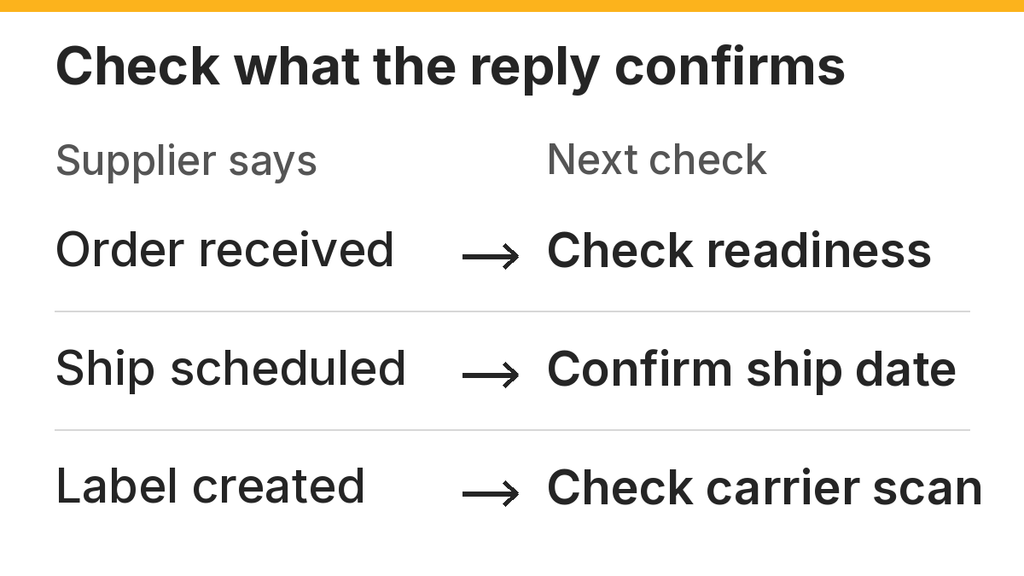
A supplier reply can confirm one milestone while leaving the next unresolved. Check the evidence before reporting order progress.
For example, UPS tracking-status definitions distinguish Label Created from a shipment UPS has received and is moving through its network. Other carriers may use different labels.
Here is a completed internal handoff for the same hypothetical order:
- Order: PO 4821, 500 branded notebooks.
- Evidence: Morgan’s February 4 email, received at 10:15 a.m. Eastern, reports receipt and referral to production.
- Checked: February 4, 10:30 a.m. Eastern. The supplier order number, confirmed ship date and outstanding conditions remain unconfirmed.
- Customer requirement: delivery by February 12; February 8 shipment was requested, not confirmed.
- Next action: Riley requests the missing confirmation by 2 p.m. Eastern. Account manager Jordan reviews any unresolved timing or proposed change at that deadline, or sooner if a risk becomes clear.
A shipping milestone also doesn’t establish arrival by the customer’s required date. Keep the requested in-hands date visible when asking the account manager to assess timing.
When should a supplier delay be escalated?
Use your supplier escalation process when a missed response or changed milestone threatens a decision or customer commitment. Don’t wait for a standard number of reminders if the order needs attention now.
Agree who follows up, who reviews exceptions and who provides backup. A Virtual Assistant’s assignment can include contacting the supplier, checking the available record and preparing an update. Define the assignment and decision boundaries before handing over the work.
Bring the account manager the unresolved fact, its source, the customer requirement it affects and the latest useful decision time. If the supplier proposes expedited freight or a substitution, collect the details for approval. Don’t accept the change unless that authority has been explicitly assigned.
For the notebook order, an unanswered shipping question should remain visible to the account manager. The follow-up owner can request clarification; the authorized decision-maker assesses whether to change the plan or update the customer.
After a call, record who supplied the update and request written confirmation of material changes. Keep one next action with a named owner so the question doesn’t disappear between sales and operations.
If the supplier needs more time, record when an answer is expected. That is a new response milestone, not confirmation that the original shipping plan still holds.
Questions about supplier follow-up
How often should I follow up with a supplier?
Use the agreed response window, supplier working hours and the order’s urgency. There’s no universal interval. If the deadline passes, check the contact details and use the agreed alternative channel. Escalate sooner when waiting would leave too little time for an authorized decision.
Should I reply in the existing email thread?
Usually, keeping the relevant thread helps preserve context. Make the order reference and unanswered question easy to find. If the subject or attachments no longer match the job, start a clear thread and reference the earlier correspondence. Save the resulting decision with the order.
Should I resend the purchase order?
First establish what is missing. If the supplier needs another copy, clearly identify it as a copy of the existing order and follow its instructions. For example, Hit’s instructions for confirming orders require clear identification to avoid duplication. Don’t silently resend a revised PO.
Should I copy the customer on the supplier email?
Follow your company’s communication rules. Supplier messages may contain internal pricing, questions or proposed changes that need review. Prepare a separate customer update when appropriate, stating confirmed information and open questions clearly. Copying the customer doesn’t transfer responsibility for checking the facts.
Give the next follow-up a clear owner
Start with one live order and assign the missing question, reply deadline and next decision. AndWeSupport lists supplier communication and order-tracking support among its services. Bring a recent order and its unanswered questions. Discuss who contacts suppliers, who reviews exceptions and who owns customer updates. Agree the responsibilities and approval boundaries for your workflow. To explore that fit, discuss supplier follow-up support with AndWeSupport.